Truth in Health Participating in the Patients1st Coalition and Bridging Conversations with MAHA
Across the United States, conversations about the future of public health are intensifying. Policymakers, scientists, physicians, and patient advocates are increasingly asking a common question: why are chronic diseases rising so dramatically, and what can be done to address the root causes rather than simply managing symptoms?
One emerging effort bringing together many of these voices is the Patients1st Coalition, a collaborative group of researchers, clinicians, and policy experts working to elevate scientific perspectives in national health discussions. Truthin.Health is currently participating in this coalition, helping contribute research insights and educational perspectives to conversations about improving population health.
Our involvement also places Truthin.Health at an important intersection between Patients1st and the broader Make America Healthy Again (MAHA) movement, which has been gaining national attention for its focus on prevention, nutrition, and transparency in health science.
While these initiatives are independent efforts, they share a similar goal: encouraging a more open and science-driven conversation about the environmental, nutritional, and systemic factors influencing health outcomes in the United States.
A Growing Concern About Chronic Disease
The backdrop for these discussions is the growing burden of chronic disease across the American population. Rates of obesity, metabolic syndrome, cardiovascular disease, autoimmune conditions, and inflammatory disorders have increased dramatically over the past several decades.
For many scientists and clinicians, these trends point to deeper changes in the environment in which human biology now operates. Modern dietary patterns, shifts in agricultural production, environmental exposures, and the widespread availability of ultra-processed foods are all being examined as possible contributors to rising metabolic stress and inflammation within the population.
Researchers in fields ranging from lipid science and metabolic biology to microbiology and environmental health are working to better understand how these factors interact with human physiology.
Coalitions like Patients1st create a forum where experts from different scientific disciplines can share research findings and help ensure that emerging knowledge is visible to policymakers and the public.
Bridging Scientific Expertise and Policy Conversations
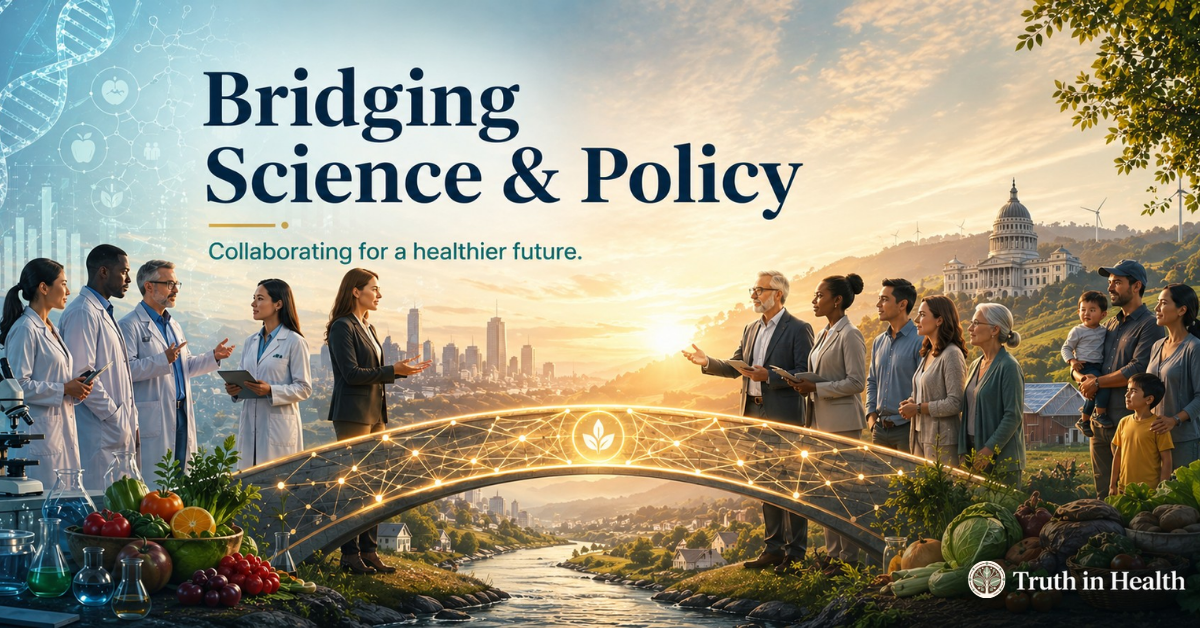
Truthin.Health has long focused on bridging the gap between scientific discovery and public understanding. Many of the most important advances in health science occur in specialized academic fields that may take years to reach public awareness or influence policy.
By participating in the Patients1st Coalition, Truthin.Health hopes to help bring forward research perspectives that deserve greater attention in national health discussions.
This includes work from scientists studying lipid biology, nutrient balance, inflammatory signaling, and other biological processes that influence long-term health. These areas of research increasingly suggest that upstream factors—such as diet and environmental conditions—can significantly shape disease risk across populations.
The broader MAHA conversation has emphasized similar themes, particularly the importance of prevention and the need to examine systemic drivers of disease rather than focusing exclusively on treatment after illness occurs.
Truthin.Health’s participation in Patients1st helps connect these conversations by providing educational resources and scientific context that can support a more informed dialogue.
Encouraging Transparency and Scientific Dialogue
One of the guiding principles of Truthin.Health has always been the importance of transparency in health science. Public trust in health institutions depends on the ability of scientists, clinicians, policymakers, and citizens to engage in open, evidence-based discussions about emerging research.
Participation in collaborative efforts such as Patients1st reflects that philosophy. When researchers and practitioners from different backgrounds share knowledge and perspectives, it becomes easier to identify areas where new scientific insights may inform future public health strategies.
Importantly, these discussions are not about promoting a single viewpoint or policy solution. Rather, they are about ensuring that scientific evidence is part of the conversation as policymakers and communities evaluate how best to address the challenges facing modern health systems.
A Role for Public Awareness
For citizens, many of these policy and scientific conversations occur behind the scenes. Yet the outcomes of these discussions influence everyday life—from food production and nutrition guidelines to the broader structure of healthcare systems.
Truthin.Health encourages readers to stay informed about emerging research related to nutrition, metabolism, environmental exposures, and chronic disease. These areas of science are evolving rapidly, and understanding them can help individuals better interpret the health discussions shaping public policy.
As Truthin.Health continues participating in the Patients1st Coalition and engaging with the broader MAHA dialogue, our role remains the same as it has always been: providing clear, science-based information that supports thoughtful discussion about the future of health.
Because building a healthier society ultimately begins with informed citizens, open scientific inquiry, and a commitment to pursuing truth in health.
Chip Paul
ECS Science Educator | Legislative Liaison, Truth in Health Association | Founder & Lead Instructor — ECS Education AcademyHost — Chip Talks Health
Cell: 918-691-5141
Resources & Education: https://t.mtrbio.com/chip-


